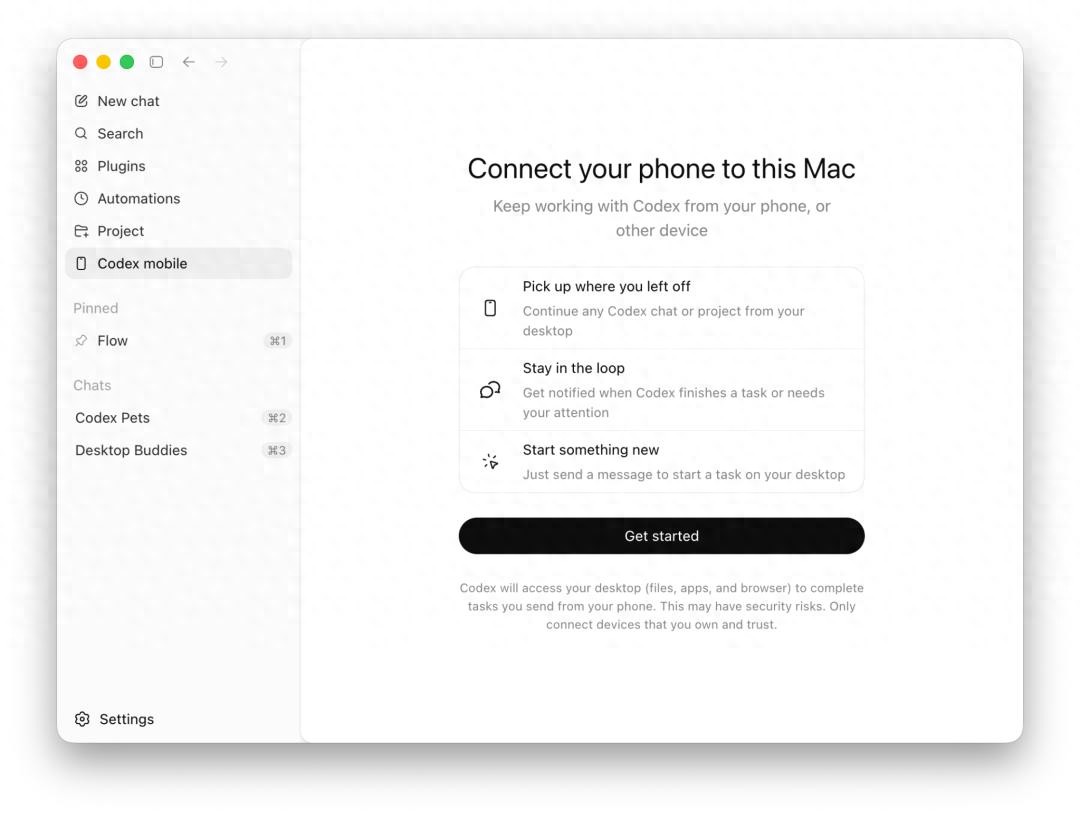
OpenAI has officially announced the beta testing of the ChatGPT mobile app with Codex integration, allowing all subscription users, including free-tier users, in supported regions to experience this update. Many developers are excited that they no longer have to be tethered to their desks, but few have noticed the industry signals behind this change. What is truly being transformed is not just the method of operation, but the underlying collaborative logic of software development. With mobile devices capable of managing the entire development process, how will the industry’s work methods change?
Not Just a Feature Addition, But a Complete Decoupling of Development Scenarios
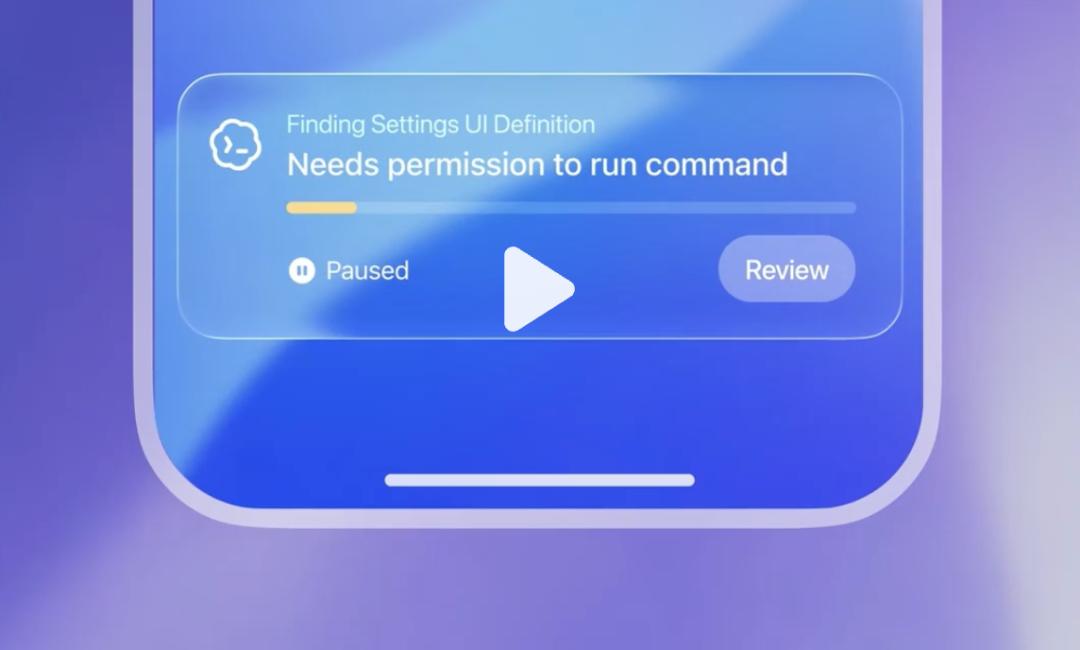
A year ago, no one could have imagined AI programming tools reaching this level: you start a complex project on your computer with Codex, close your laptop to go out for coffee, and Codex runs code generation and testing in the background. If it encounters a point that requires authorization, it sends a notification to your phone, and with a tap, you can continue running the process.
This experience was previously unimaginable; once developers left their desks, long-term tasks would either stall or have to be handed over to uncontrollable automated processes. Now, the phone has completely transformed into a mobile control center for development work.
You can check code differences during your commute, approve merge requests in between client meetings, and issue new development instructions to Codex from a coffee shop. All core computations and file storage remain on the local computer, with only the necessary interactive nodes synchronized to the mobile device.
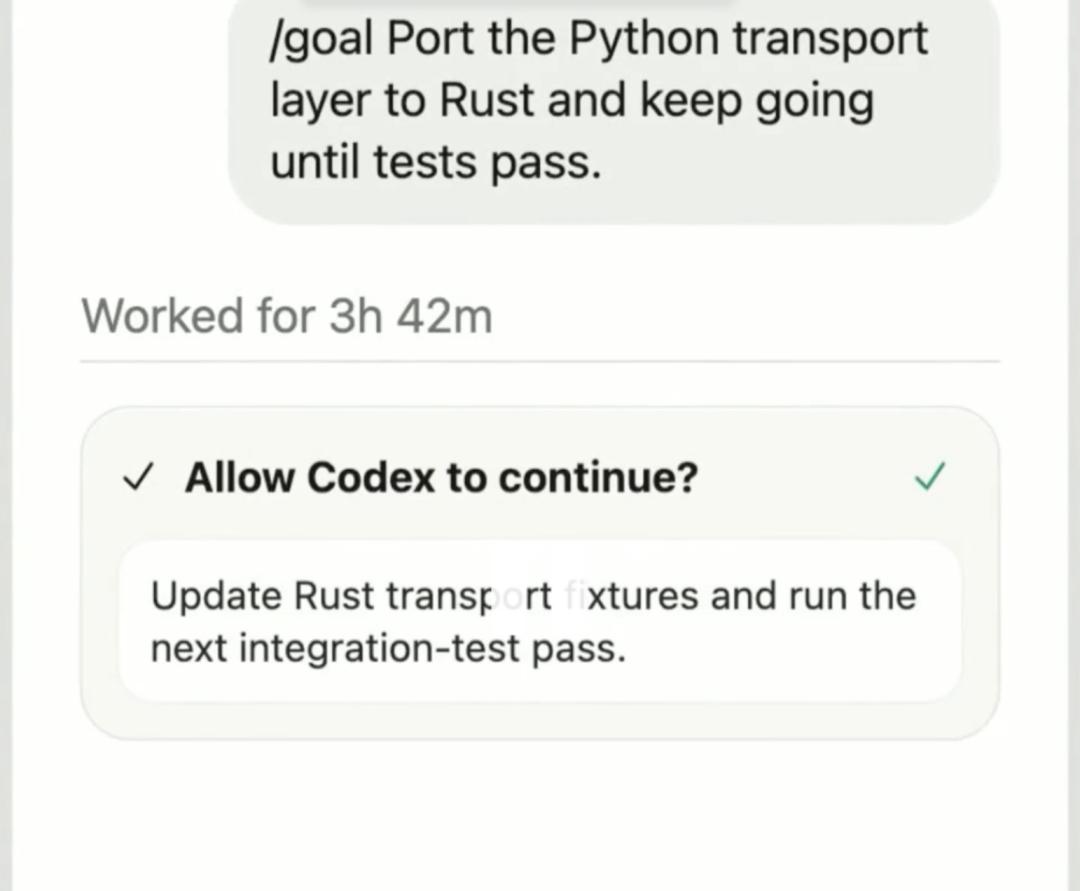
OpenAI’s core action this time is to decouple development work from the “fixed workstation binding.” Development is no longer a full-time job in front of a computer; it has become asynchronous collaboration that can be advanced in fragmented time.
For freelance developers and remote workers, this change directly addresses the most troublesome pain points: no longer missing project milestones due to unexpected outings, and no need to carry a heavy laptop everywhere.
Security Mechanisms Hide Industry’s Invisible Compromise
Many people’s first reaction is to worry about security: will remote control of the computer to run code expose local files and private credentials? OpenAI’s solution actually reflects the industry’s direction of thought.
Codex uses a secure relay transmission mechanism, which does not expose local devices directly to the public internet. All core files, account credentials, and environment configurations remain on the local device running Codex, while the mobile side only synchronizes task statuses, running logs, and result screenshots.
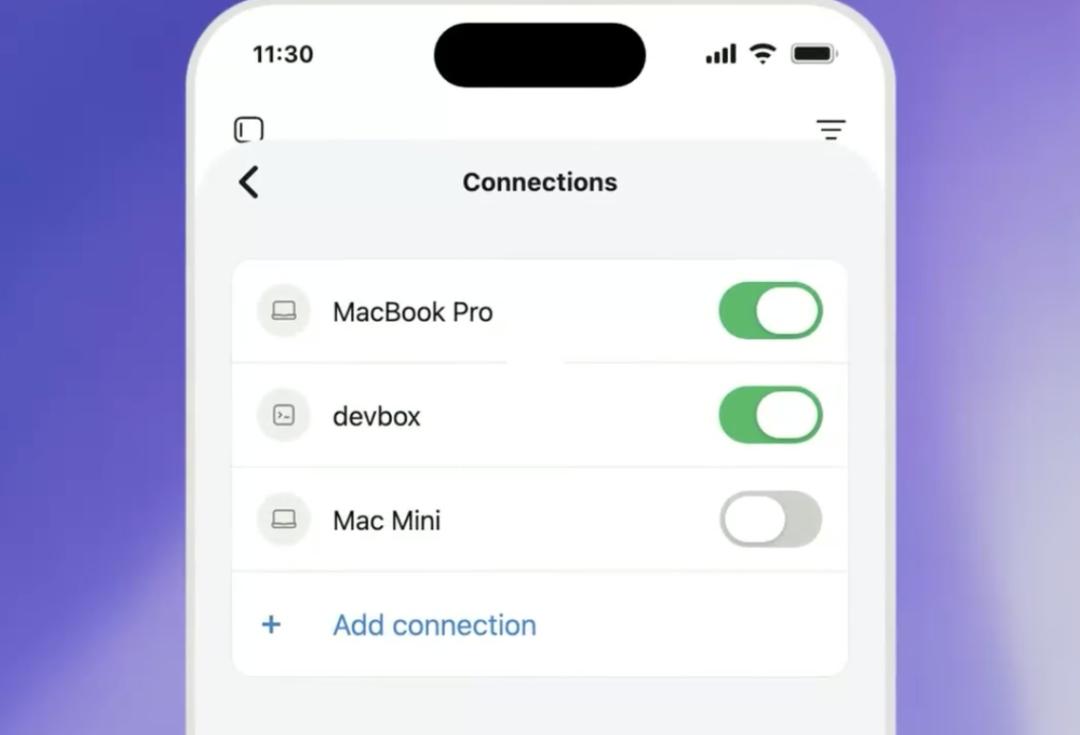
In other words, the relay server is only responsible for transmitting commands and statuses, without touching any of your core sensitive data. This design is actually the optimal solution balancing usability and security.
If the convenience of remote control were pursued purely, opening public access would undoubtedly be simpler. However, OpenAI chose a more cautious relay solution, reflecting the core requirement of AI tools in the enterprise market: security always takes precedence over functionality.
Updates for enterprise users also confirm this point: not only has remote SSH connection been opened to adapt to standardized enterprise development environments, but programmatic access keys have also been introduced to fit internal automation processes. The Hooks tool supports custom compliance checks and even meets HIPAA medical privacy standards.
These updates point to a clear direction: AI development tools are rapidly evolving from toys for individual players to production tools that meet enterprise compliance requirements.
Market Competition Forces Rapid Feature Iteration
The launch of Codex’s mobile functionality actually came three months after Anthropic’s similar remote monitoring feature for Claude Code, which was introduced in February. However, OpenAI’s advantage this time lies in making it available to all subscription users, including free-tier users.
Community feedback shows a shift: a few months ago, developers were split 80-20 between Claude Code and Codex, but now it is nearly 50-50, with many teams switching entirely to the Codex ecosystem. The core reasons include a more stable account mechanism and faster feature iteration speed.
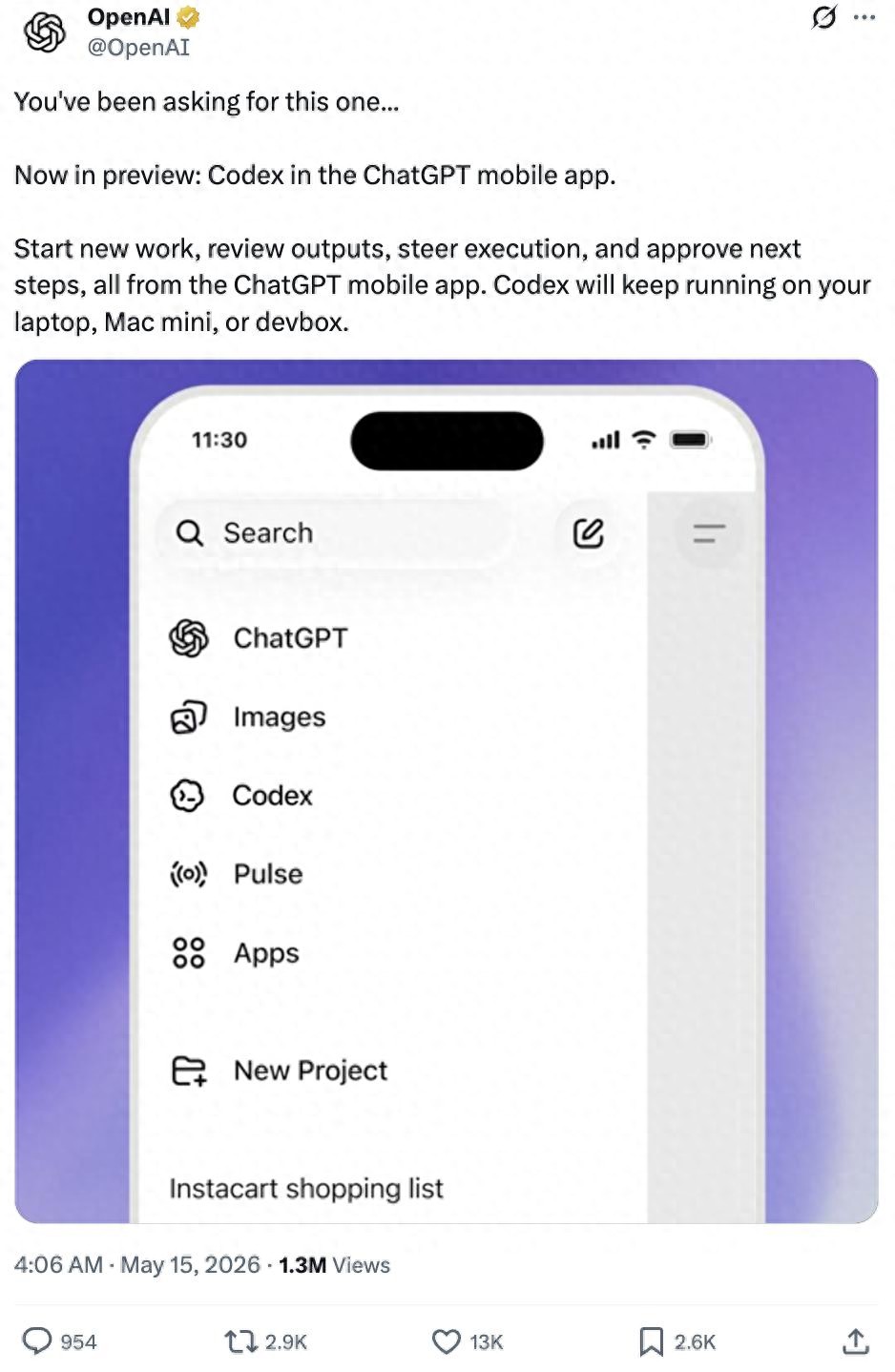
The update pace of Codex in the last three months has indeed been surprising: first, the desktop backend autonomous operation capability was launched, followed by the introduction of a built-in interactive plugin for Chrome, and now the mobile remote control feature has been added, each step addressing the most pressing user needs.
The competition among AI programming tools has evolved from a contest of model capabilities to a competition of full-scenario experiences. The smoother the collaborative experience across different devices, the more user goodwill can be garnered.
Many developers have already started using the mobile Codex for on-site debugging: upon receiving user feedback about a bug, they can pull out their phones to connect to their computers, check the code, and issue modification commands, completing fixes in minutes without waiting to return to their desks. Such response speed was previously unattainable.
The Real Change is the Reconstruction of Workflows
Many see this update as a minor feature addition; in reality, it brings about a reconstruction of the entire development workflow. We can compare the changes before and after:
| Dimension | Before Update | After Update |
|---|---|---|
| Time Binding | Must sit at the computer for long periods | Can advance projects in fragmented time |
| Space Binding | Must handle tasks at the workstation | Can manage progress from any location |
| Collaboration Mode | Multiple people synchronously monitor tasks | Asynchronous node authorization can advance tasks |
| Resource Allocation | Local device occupied throughout | Local backend computation, front-end mobile interaction |
The efficiency gains from this reconstruction are quite evident: where previously only one or two large tasks could be handled in a day, now three to four projects can be advanced using fragmented time, and long-term development tasks will not stall because developers leave.
The true popularization of AI has never been about cramming all functionalities into mobile devices, but about letting different devices fulfill their respective roles: computational power is given to the more powerful desktop, while interaction is handled by the more portable mobile device.
OpenAI has announced that it will soon launch the capability for mobile devices to connect to Windows Codex, covering more desktop users. It is foreseeable that multi-device collaboration will become a standard feature of AI programming tools, and the industry will quickly keep pace with this rhythm.
When development work is completely freed from workstation binding, the biggest change is not that developers have become easier; rather, more non-full-time developers can participate in projects: designers can tweak front-end code on their way home, product managers can directly adjust functionality logic on their phones, and startup teams can advance projects anytime and anywhere without needing to gather everyone together.
This seemingly small feature update has actually opened a new door: software development is no longer a professional task limited to a few people in an office, but a collaborative process that anyone can participate in anytime and anywhere. The industry increment brought about by this change may be far greater than we currently predict.
What tasks would you most like Codex to help you with on your phone? Bug fixing or project management?
Comments
Discussion is powered by Giscus (GitHub Discussions). Add
repo,repoID,category, andcategoryIDunder[params.comments.giscus]inhugo.tomlusing the values from the Giscus setup tool.