Vibe Coding Arrives at Xiaohongshu
On April 8-10, the first Xiaohongshu hackathon kicked off with a grand opening and concluded with a group photo and confetti. Two hundred participants formed teams to develop a product demo within 48 hours, followed by a day of presentations and evaluations for a chance to win a prize of 500,000 yuan.
Hackathons, also known as hack marathons, require all creativity and innovation to occur within a set time frame. To maximize their time, some participants coded for 24 hours straight, while others averaged just one hour of sleep over three days, collectively experiencing a state of exhaustion mixed with excitement.
Among the participants were several champions and star players from top global tech competitions, young entrepreneurs, students, and employees from major companies, including a team with an average age of just 13.25 years. They rallied behind the slogan “Let’s Vibe Coding,” which refers to a software development method that uses AI to directly convert natural language into computer code, allowing anyone with an idea to develop without prior programming experience.
Thirteen-year-old Yang Xizhe, a post-2010 born participant, has already taught millions to memorize vocabulary using AI across social media platforms, with parents flooding the comment section. Meanwhile, Chen Jinchun, a post-2000 participant, humorously referred to himself as “old” compared to the younger competitors.
Beyond the prize money, these tech enthusiasts sought the opportunity to learn from industry experts. The judging panel included notable figures such as Liu Jingkang, founder of Insta360, and Cao Xi, founder of Monolith, alongside Xiaohongshu’s business leads.
The competition was divided into hardware and software categories. Some teams created a brain-controlled wheelchair that navigates using brainwaves, while others developed a fortune-telling calendar machine, an emotional companion robot named “Pengpeng,” and software to facilitate communication with barbers for custom hairstyles. Another team designed an intelligent “P cushion” that detects prolonged sitting and provides tactile reminders, even emitting a sound when sitting too long.
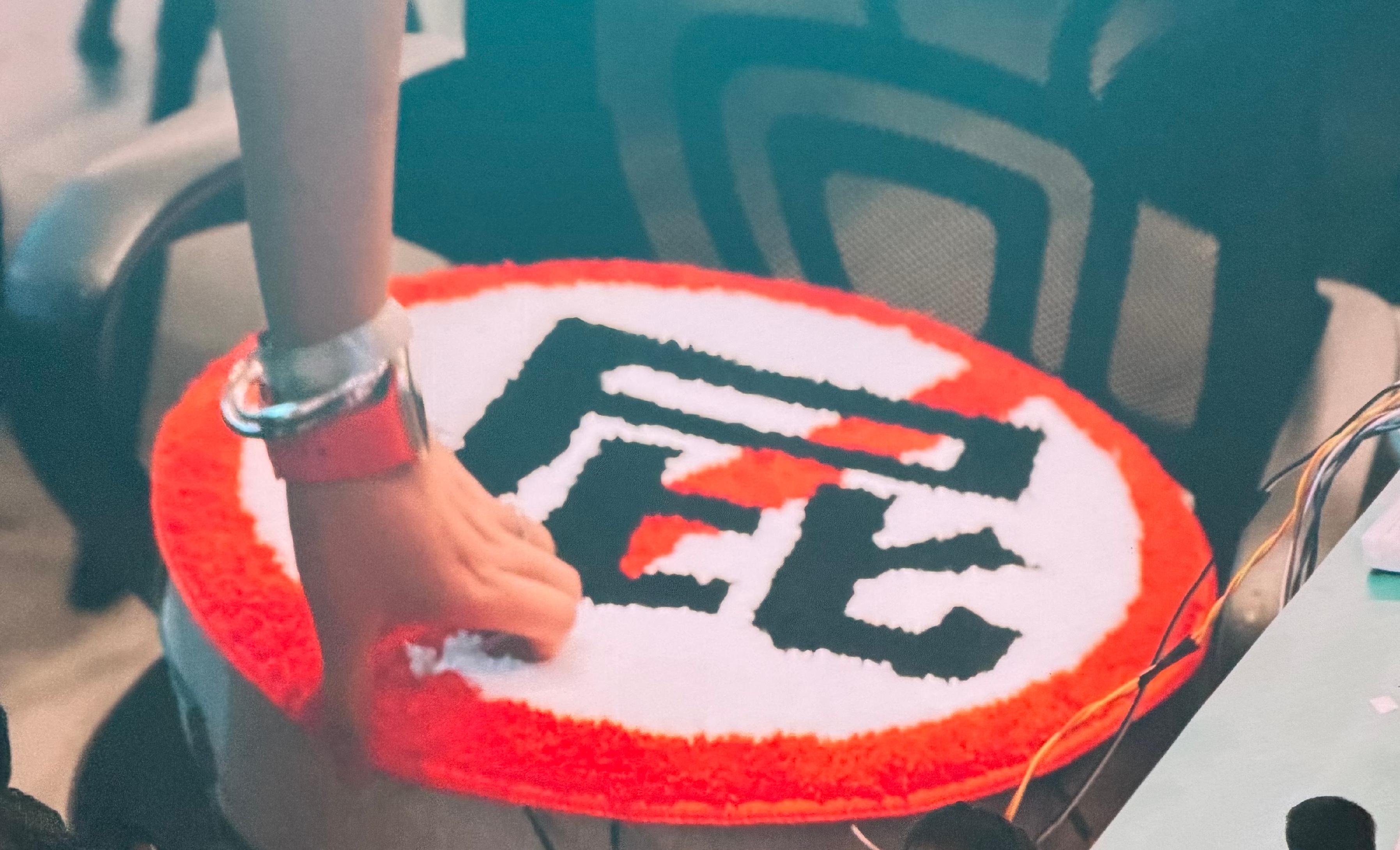 The intelligent “P cushion” that monitors prolonged sitting (Chen Yueqin/Photo)
Ultimately, the team that developed the pocket guitar PG-2 stole the show, winning the grand prize of 200,000 yuan. This pocket guitar is the size of a mobile phone, featuring a color screen and six strings, with a joystick salvaged from a SWITCH game controller.
As more post-2000 and post-2010 participants took to the Vibe Coding stage, Xiaohongshu aimed to capture the attention of this emerging generation of tech creators.
According to San Bing, head of Xiaohongshu’s technology business, the platform’s long-term vision is to become the best tech community. In 2024 and 2025, they plan to promote a “tech circle of friends” by introducing influential figures from the tech, academic, and business sectors through initiatives like AMA (Ask Me Anything).
Recognizing the growing demand for product launches and partnerships among entrepreneurs on Xiaohongshu, the platform has set a goal for 2026 to become a connector in the tech space, linking various industry players, including creators and entrepreneurs. The hackathon was organized against this backdrop.
San Bing emphasized that during the early development of their tech community strategy, they decided against two approaches: first, not to follow trends in becoming an information platform, as many users view tech news merely as entertainment; second, not to focus on tutorials, given the oversaturation of low-quality content that often spreads anxiety rather than genuine education.
He believes that Xiaohongshu’s foundation is a community with a sense of real human interaction, with lifestyle content being the initial entry point that highlights community value. By exploring where users express their creativity, it becomes evident that technology is a significant area. With the rise of Vibe Coding, more people are creating, and this trend is on the rise. Xiaohongshu is committed to fostering social connections, focusing on entrepreneurs, developers, and investors in the tech field.
Xiaohongshu’s community lead, Paru, shared some statistics: although the platform has only been producing tech content for about two years, the annual growth rate of tech content has exceeded 100%, with the number of creators increasing by over 200%. There are currently 160,000 active developers on Xiaohongshu, with over 90% of users publishing and creating more than one product within a year.
Xiaohongshu is attempting to move beyond labels like “female product recommendations” and “travel check-in community,” extending its reach into gaming, anime, and now building the foundations of a tech community. This transformation has taken two years.
Unlike previous hackathons that primarily involved core programmers focused on solving specific code bugs or developing open-source tools, this year’s Xiaohongshu hackathon’s theme was “48 hours to create a big toy for the world.” Some participants were not formally trained in programming; they included designers, music enthusiasts, and students.
With the proliferation of large language models and low-code tools, the barriers to programming have significantly lowered. Participants shifted their focus from solving bugs or addressing business pain points to self-expression. As AI can now create entire presentations, some participants expressed the desire to develop better PPT tools, emphasizing that “your taste is your unique moat.” Others aimed to create practical tools or even whimsical products, with one participant stating, “I have the freedom to create the world’s worst garbage.” Another participant adopted the motto, “Being interesting is more meaningful than being meaningful itself” for the competition.
Comments
Discussion is powered by Giscus (GitHub Discussions). Add
repo,repoID,category, andcategoryIDunder[params.comments.giscus]inhugo.tomlusing the values from the Giscus setup tool.